Facts Don't Fix Problems
Why my Engineering Brain won’t stop Big Tobacco.
We have heard it all before. Smoking is bad for your health. So you shouldn’t. End of story.
If it was truly that simple, why do we still have 8 million tobacco-related deaths annually? Ah, because it’s so addictive of course! So how about this: let’s ban cigarettes and stop Big Tobacco! Problem and solution. It’s that simple. But…
Alcohol and fast food are also bad for your health.
And tobacco generates a lot of taxes for the government.
Besides, we now have less harmful e-cigarettes.
And after all, it's a personal choice, right?
Every tobacco control advocate or expert I have met can easily explain why the above statements are false or at least highly misleading. In fact, if you know the scientific evidence from medical, economic and societal research, it becomes nearly impossible to argue why we should allow nicotine products to exist.
But… they do.
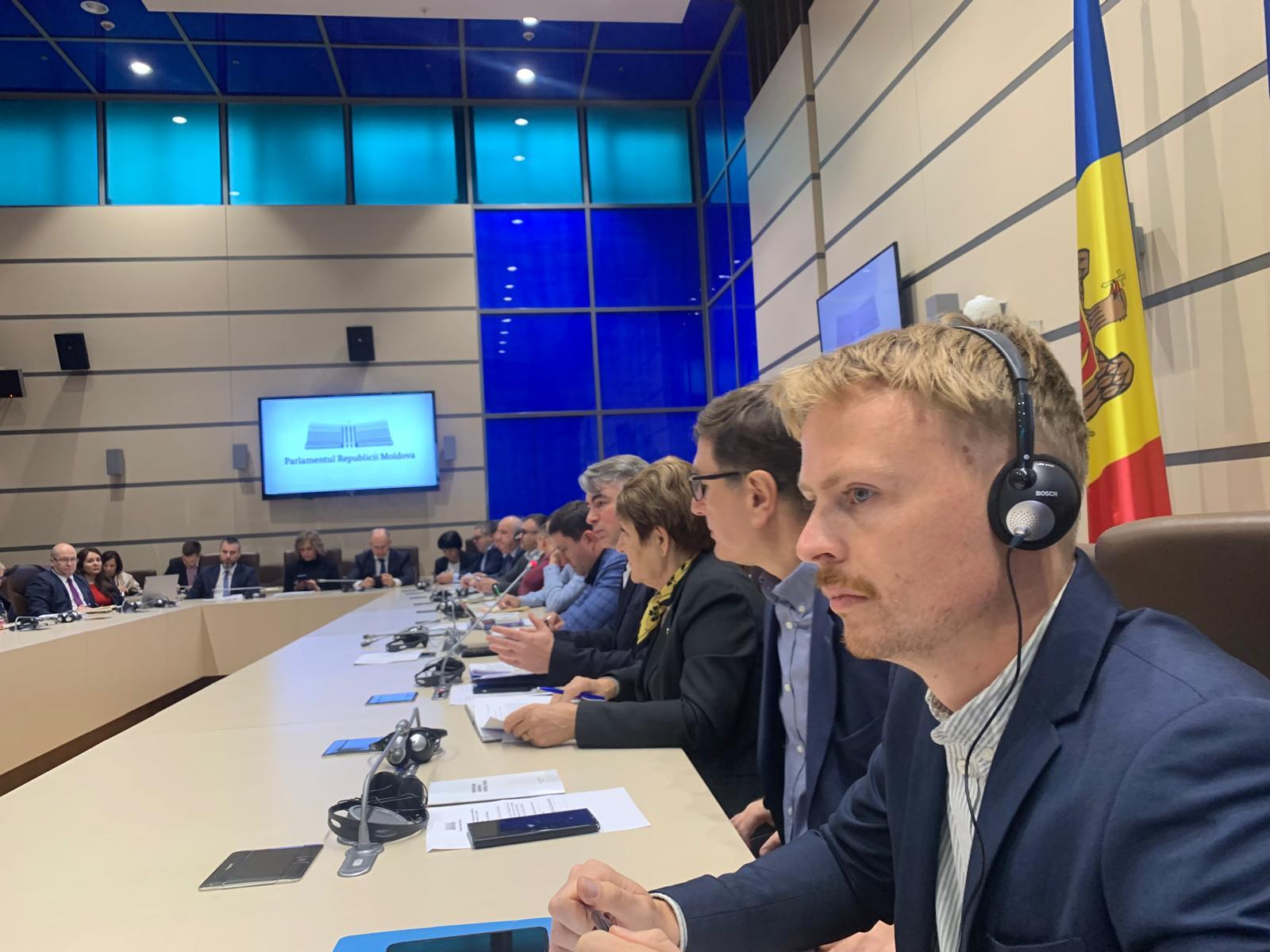
Being active in tobacco control for about two years, I have spent many hours in conversation with tobacco control legends, like Cornel Radu-Loghin and Laurent Huber, both of whom have devoted decades to the fight against Big Tobacco. My first encounter with Cornel was sitting beside him in the Parliament of Moldova, calling out the tobacco industry's lies during a public hearing. From him, I learned the value of experience and resolve in the face of industry pressure. It was Laurent who showed me we've been thinking too small. The tools to end the epidemic already exist. Through them, I have learned numerous good arguments and reasons on why and how we can stop the nicotine epidemic:
The cigarette is by far the most deadly product ever invented.
Societal costs and economic burden of nicotine harm are a multitude of tax revenues.
E-cigarettes are primarily targeting children.
And over 60% of smokers want to quit, but most don’t succeed, so it’s not a free choice, right?
All these arguments are sound and evidence-based, so I must confess I am struggling to understand why we haven't won yet?
Let me be clear, I acknowledge that huge progress has been made. Thanks to tobacco control advocates globally, we now have advertising bans, smoke-free environments and sales restrictions. But being an engineer by education, I am trained to think in terms of problems and solutions. When comprehensive solutions are abundant, gradually phasing out nicotine products via so-called endgame policies, the problem simply shouldn’t persist.
Of course, the same reasoning accounts for a lot of fixable problems. Why do we still have coal power plants? Or factory farming? My engineering brain, hunting for quick fixes, struggles to comprehend. I have come to understand that just that might be the core of the issue.
As an engineering student, I competed in a solar car race. Midway through, our car broke down. So we did what engineers do: we broke the problem down to its distinctive parts, traced the fault to a single defective connector, fixed it, and got back on the road.

But, large societal problems are not solvable by applying a rational, analytical approach. Just like climate disruption and factory farming, we can’t take the tobacco epidemic apart in distinctive pieces, like a machine, find the defective part, and fix it. Mere problem-solution thinking won’t cut it. There’s more to it; the tobacco epidemic persists not because we lack solutions, but because the industry has spent decades making the problem normal.
Let’s return to the arguments my friends continue to tell me and that, until recently, I also firmly believed.
Alcohol and fast food are also unhealthy.
Tobacco generates a lot of taxes for the government.
We now have less harmful e-cigarettes.
It's a personal choice.
The problem with these statements isn’t that they are not true. The issue is that they feel true.
Big Tobacco frames its narratives in ways that feel intuitively right. Once people are moved in a certain direction, rational counterarguments often struggle to change their minds. Jonathan Haidt calls this the rider and the elephant. Reason is the rider, emotion is the elephant. The rider thinks it's steering but the elephant decides where to go. Industry arguments speak to the elephant whilst every counterargument I'd learned was briefing the rider.
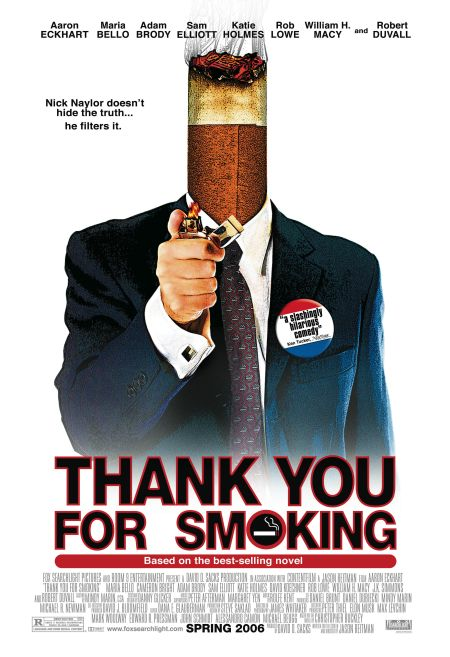
A moment that opened my eyes was watching the satirical movie ‘Thank You for Smoking’, in which a slick tobacco lobbyist defends the cigarette industry, winning the public debate with rhetoric rather than truth.
So can we blame policy-makers voicing industry-fueled statements when they intuitively feel like common sense? Can I blame my friends for being ignorant about basic facts, when I was just as ignorant? Using these misleading narratives, the tobacco industry has successfully managed to portray themselves as ‘just another industry’ and the cigarette as ‘just another product’. How can I fight something that feels so normal? A powerful industry designed it that way. Which means the fight isn't just about evidence, it's about narrative.
When writing this piece, I have been wanting to give you a clear answer. My engineering brain wants nothing more. I can’t help but look for the silver bullet, the magic solution.
Perhaps policy-makers should be protected from meeting with the tobacco industry?
Perhaps civil society should start talking more about ending the epidemic, not controlling it?
Perhaps we could make nicotine illegal?
Perhaps the tobacco industry could be sued for violating human rights?
Or perhaps I have to accept that there is no clear fix. The fight against Big Tobacco isn't a straight line to victory. It's a bumpy road with ups and downs, wins and losses. We need a variety of approaches. Some will work, some won't.
What I keep coming back to is this: we are addicted to the idea that nicotine is normal. And for too long, we've been trying to fix that with facts. Facts that are true, but don't feel true. We've been briefing the rider whilst the industry has been steering the elephant and that needs to change. I mean, we have all the facts on our side, right?
Joachim is a Tobacco-Free Future Fellowship alumnus at The School for Moral Ambition and cofounder at Impact Unfiltered, a Brussels-based initiative to advocate for better tobacco and nicotine regulations.

Comments ()