
Holding Out for a Hero: The Funding Gap in the Fight Against Big Tobacco
Not all heroes wear capes. Some wield a cheque book.
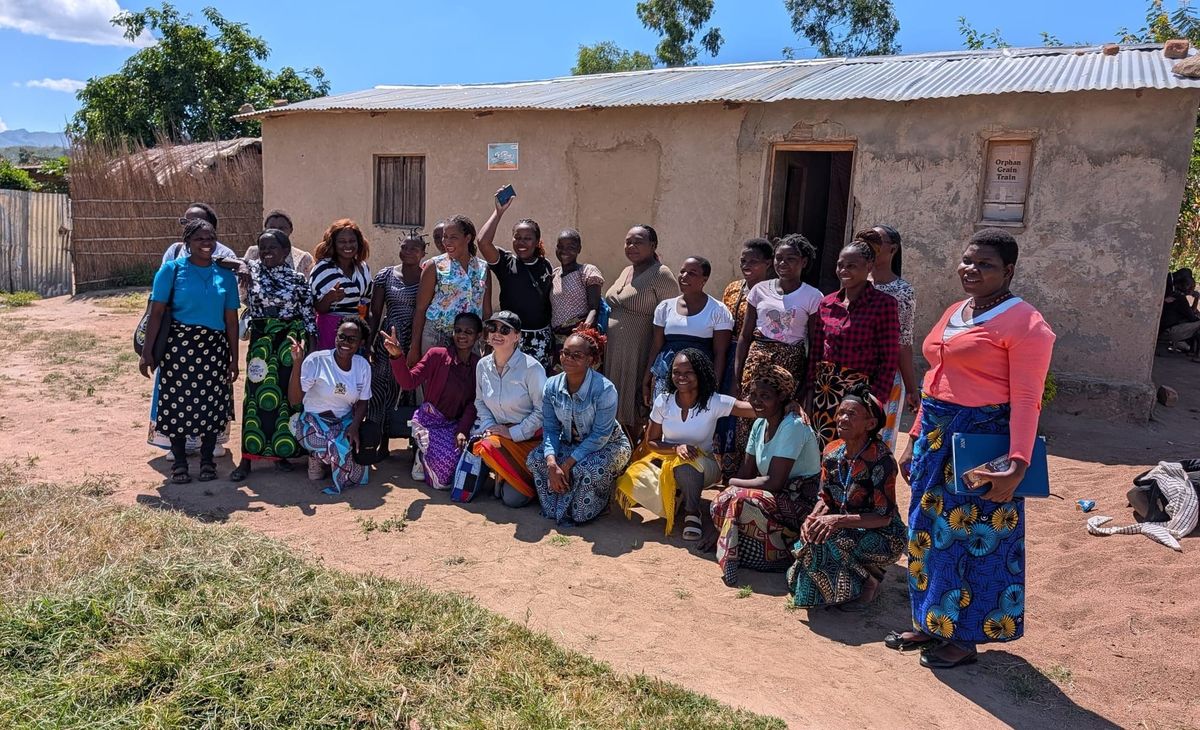
I have spent the past thirteen years living and working in Malawi. Before that, Ethiopia. Before that, The Gambia. The problems I observe here in Malawi are complex, rooted in colonial history with multiple political, structural, cultural, social and environmental factors. But often, at their most basic level, many are caused or exacerbated by a lack of money.
I’ve visited schools with too few classrooms, not enough furniture for children to sit on, and not enough teachers to keep class sizes at a level where children can actually learn. I’ve been to clinics where overworked healthcare workers don’t have paracetamol because there’s not enough funding in the health sector. In my work on gender-based violence, I’ve heard from women whose suffering is compounded when they don't have the cash for transport to the police station to report the crime, and if they finally get there, there are not enough advocates in the justice system to fight their cases. Across Malawi, committed teachers, health workers and community activists show up every day and do remarkable things with almost nothing. But there are limits to what dedication alone can achieve.
I grew up in Ireland. I know that in the EU, where we have high GDPs and per capita incomes, things are rarely as simple. The ‘easy to fix’ problems have been solved. The problems we still face there tend to be structural, behavioural, political, and entrenched. When systems fail in wealthy countries with high education levels and functioning institutions, the reason is usually not just that there wasn't enough cash. Pure resource problems - problems that would dissolve if someone simply funded them adequately - are the exception, not the rule.
Last year, Malawi was rocked by the US government funding cuts, followed rapidly by a broader decline in overseas development funding. The consequences were immediate and concrete. A Malawian colleague leading education programmes described much needed girls’ secondary school boarding hostels in his district left roofless and half-constructed. A roads development project serving rural communities that I worked on was dropped mid-preparation - millions spent on planning and groundwork, abandoned before a single road was built. All the investment, none of the outcome.
It was from this context, and from a country whose economy remains deeply dependent on tobacco cultivation, that I joined The School for Moral Ambition's Tobacco Free Future fellowship, with an assignment to research the barriers and bottlenecks to funding in EU tobacco control. The irony was vivid for me: the same crop that is central to the livelihoods of so many Malawian farmers kills 700,000 Europeans every year. The same companies profiting from those European deaths are the ones contracting Malawian farmers, hindering their transition to other crops, and keeping them in debt.
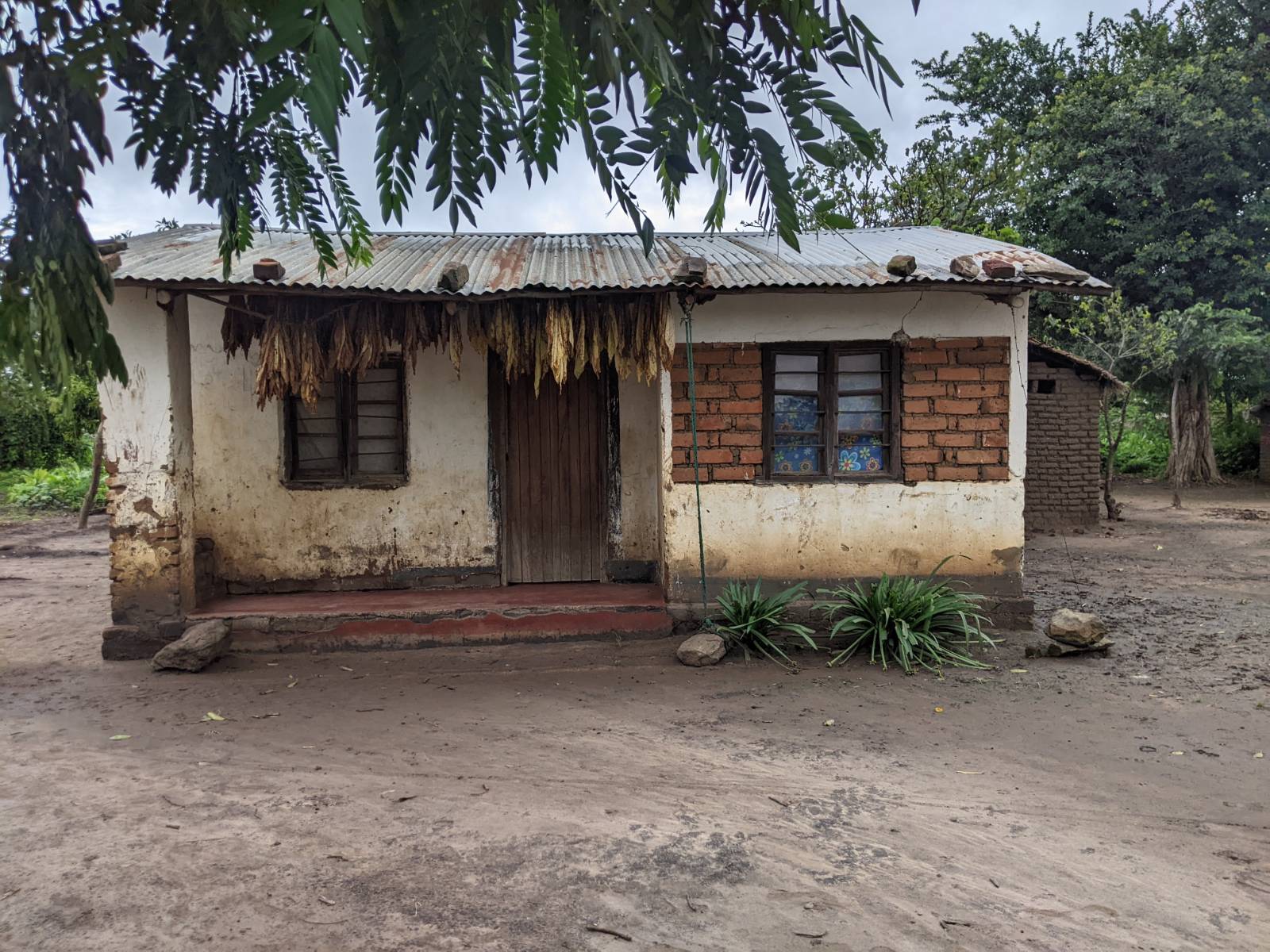
I assumed, going into the research, that a cause this well-documented, affecting rich countries, with a global death-toll of 8 million people annually, would have well-resourced organisations behind it. During a research call with the Executive Director of an established EU anti-tobacco organisation, I heard something that gave me the same feeling as watching the Malawi cuts unfold: they had lost 60% of their funding after the EU cut its operating grants to civil society health organisations. The groundwork was there - the relationships, the expertise, the policy access. But the fight had been abandoned mid-field, for the same reason the roads in Malawi never got built. Not because the work wasn't worth finishing, but because no one wrote the next cheque.
I was perplexed to hear that some of the most experienced advocates working in this space - people with decades in the sector, still showing up to meetings with MEPs - had gone stretches of the previous year without salary - something that’s sadly commonplace among civil society staff in Malawi, but not, I had thought, something that happens in wealthy Europe. Malawi doesn’t currently have the resources to solve its problems. Europe does, but chooses not to. A lack of funding for a solvable problem in a poor country is a tragedy. In a rich one, it's neglect.
And tobacco control is not an isolated story: as The Good Lobby has documented, the EU's withdrawal of operational funding has hollowed out civil society health organisations across the board. When the money dries up, the consequences are concrete: a policy window closes, a piece of legislation weakens, a loophole stays open.
On one side of this fight sit organisations like ENSP, ASH, and Smoke Free Partnership, the unsung heroes of European public health, committed but under-resourced, doing everything they can with almost nothing. On the other sits a trillion-dollar global industry with deep pockets, sophisticated lobbying operations, and decades of experience delaying and derailing public health legislation.
Philanthropic funding has been slow to flow into this space for two reasons. The first is the assumption that governments should lead: the fiscal case is compelling, every euro invested in reducing tobacco use returns multiples in reduced healthcare costs, and governments are the ultimate beneficiaries. But governments think in election cycles. The savings from reduced tobacco use materialise over twenty, thirty, forty years. The excise duty from tobacco sales materialises now. No finance minister eyeing a five-year horizon is going to voluntarily shrink that revenue stream, and they are unlikely to do so without sustained external pressure from civil society - pressure that itself requires funding to build. The second reason is invisibility. Prevention has no patient to photograph, no crisis to film, no human face to connect with. When it comes to tobacco, the adage 'a single death is a tragedy; a million deaths is a statistic' is sadly true. Compounding this, many funders operate under the assumption that tobacco is a solved problem, a perception the industry has spent decades and considerable resources actively cultivating.

Tobacco control is one of the most cost-effective interventions in all of public health, with a rigorous evidence base. The policy levers are known. The organisations with the expertise and the access exist. What is missing is the sustained funding to keep these advocates in the room, at the table, and in the fight - the kind of committed, independent support that matches the timeframe of the problem.
The 2026 UK Tobacco and Vapes Act, won through sustained civil society advocacy, will raise the legal age of sale until no one born after 2009 can ever legally buy tobacco. It has shifted the narrative, dismantling the 'problem is solved' excuse, and has given me a reason for hope. The arguments for inaction, that this is solely the government's job, that there is no face to put on prevention, have never been good arguments, just convenient ones. The hero this fight needs is someone who has seen the suffering hidden in statistics, recognised the gap, and decided that unglamorous and neglected is not the same as unwinnable.
In rural communities in Lilongwe, close to where I live, GiveDirectly's work providing cash transfers has shown me that the gap between a problem and its solution is often, painfully, just money. Seven hundred thousand European lives lost to tobacco every year, to a preventable cause, in part because the people fighting to prevent it cannot pay their staff. A funding failure, not a policy one. And funding failures, I have seen, can be fixed - by a hero willing to join those already on the battlefield and write the cheque that finishes the fight.
Comments ()