Eight Million Deaths and a Business Story Like Any Other
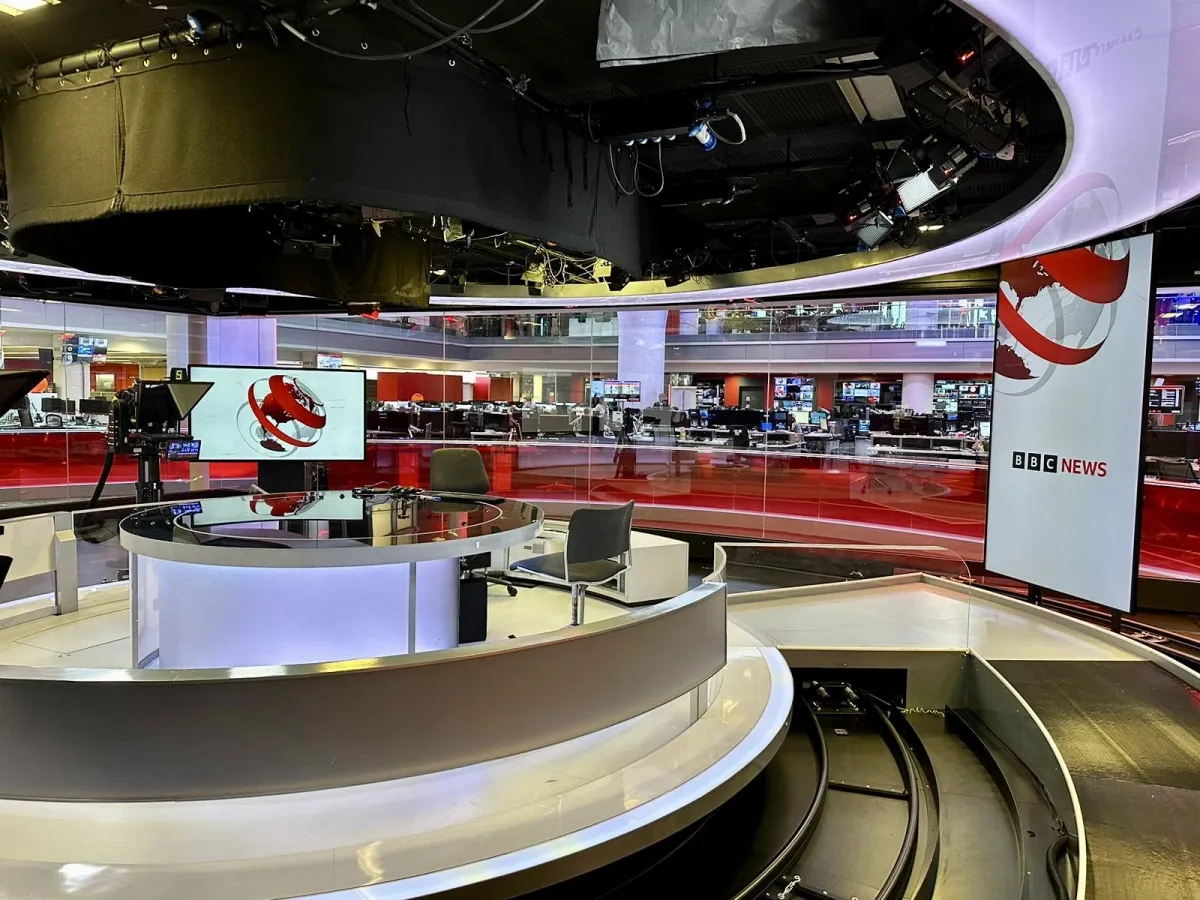
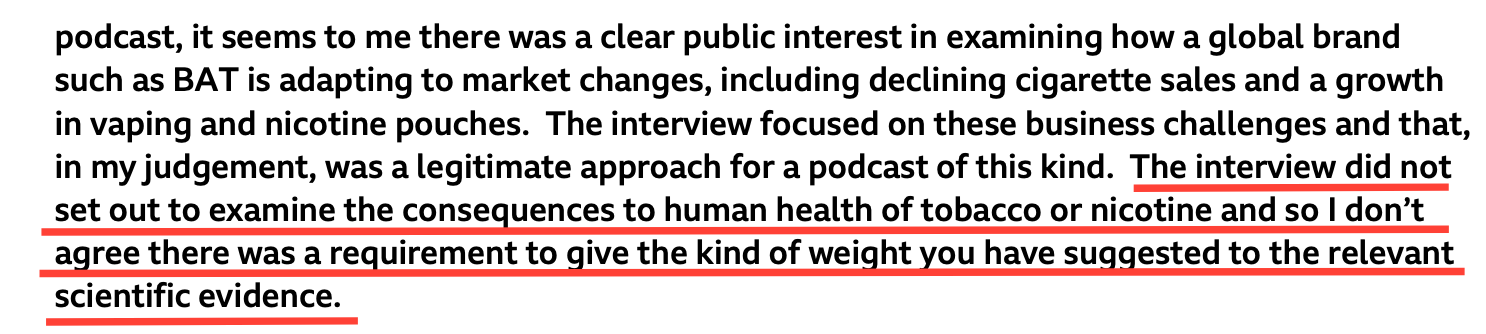
In December 2025, I received a letter from the BBC's Executive Complaints Unit. This was the BBC's final word on a complaint I had filed about a business podcast and news article that gave British American Tobacco (BAT) a warm, uncritical platform to describe its pivot away from cigarettes. The response was politely worded and entirely candid about what the BBC did not consider to be their problem:
The interview did not set out to examine the consequences to human health of tobacco or nicotine and so I don't agree there was a requirement to give the kind of weight you have suggested to the relevant scientific evidence.
I grew up in the UK with the BBC woven into daily life; Grandstand on a Saturday, Have I Got News For You on a Friday, Radio 1 in the morning, Radio 2 at the dentist, Attenborough documentaries on a Sunday. The BBC has its critics. The Daily Mail has spent decades convinced it's too woke, too London, too soft on whatever the culture war target of the week happens to be. My complaint is simpler. The institution I grew up believing was on the side of the public - and whose name is still shorthand, globally, for trusted journalism - told me, in writing, that an industry killing eight million people a year was a business story like any other.
After a month of intensive onboarding, I arrived in Brussels in October 2025 as a fellow at The School for Moral Ambition, primed to fight one of the most destructive corporate industries of the last century: big tobacco. The industry was up to its old tricks. What I didn't expect was that the institutions we've come to trust were helping it - following their rules, ticking every box, and making space for an industry that has spent decades earning its pariah status.
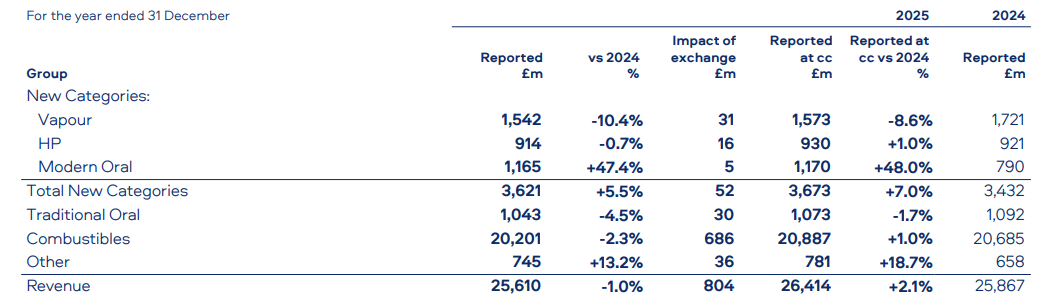
The BBC news article and 'Big Boss' podcast interview in question were framed around the transformation of BAT: declining cigarette sales, a pivot to vapes, the future of nicotine. Friendly, politely professional, and even a personal profile of an executive including a section on "what she does to relax." BAT's own data, easily available on their website had anyone at 'Big Boss' chosen to look, tells a different story: roughly 79% of BAT's revenue and 89% of its profit continue to come from cigarettes. This isn't a vape business. This is a company deriving nearly all its income from a product that kills half its long-term users. A rebrand designed to be mistaken for a transformation. At the end of the interview, the presenter reflected that it was "really interesting to hear how BAT are trying to pivot." High fives all round in the BAT PR department.
The BBC gave this rebrand a platform, a presenter, and the implicit endorsement of its logo. When I complained, I was told the program did not set out to examine the consequences to human health. That listeners could draw their own conclusions. What gets said on a business podcast is about business; the human cost is context we simply tick off. Alcohol, gambling, fast food, fossil fuels; the BBC covers them all. But none of them kill half their long-term users when used exactly as intended.
Adam Curtis, whose films incidentally are themselves predominantly BBC productions, has spent decades documenting how power learns to speak the language of its critics, absorbing the vocabulary of accountability while remaining structurally unchanged. BAT has done something similar: learned to speak fluent BBC. Not as a tobacco company defending its right to addict people, but as a complex corporation navigating a changing market. Once you're fluent in an institution's own language, its rules don't apply to you - you're a welcome guest on their cozy business podcast.
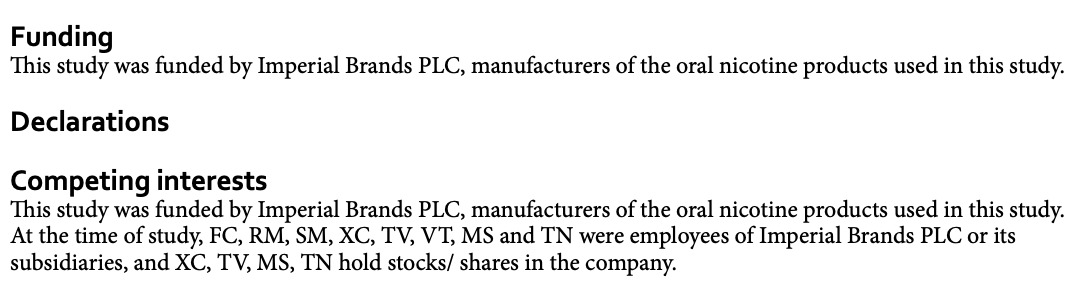
The same pattern runs through science. In the same week the BBC published their pieces, Nature Scientific Reports published a study entirely designed, conducted, analysed, and written by Imperial Brands employees, testing their own products. It disclosed funding and conflicts of interest, it passed peer review, and it broke no rules. What it didn't do was include a nicotine-free control, or test people who were actually trying to quit - the population for whom a genuine 'harm reduction' claim would need to hold. The title, meanwhile, reads like copy from a product launch: satisfying alternatives.
Naomi Oreskes, in Merchants of Doubt, described how industries manufacture uncertainty to delay regulation. This is the next iteration: manufacturing credibility. Not by producing the best science, but by moving through gaps that nobody designed, nobody maintains, and nobody has decided is their job to close. Get into the journals. Get into the medical education pipeline. Get into the knowledge base. By the time the research reaches a practicing clinician or policy maker, it has passed through enough institutional filters to look, from a distance, like trustworthy science.
Nobody at the BBC lied. Nobody broke a rule at Nature Scientific Reports. The complaints unit applied the editorial guidelines with apparent care. When responsibility is distributed evenly enough across roles and processes, it doesn't get shared, it disappears. Everyone did their job. Yet nobody is accountable for the outcome.
The WHO Framework Convention on Tobacco Control, the world's first legally binding public health treaty, exists because this industry has a documented, decades-long history of lying to regulators, funding junk science, and infiltrating professional bodies. Article 5.3 states flatly that tobacco industry interests and public health interests are fundamentally irreconcilable. The BBC and Nature are not bound by the treaty. But they might ask why it had to be written in the first place.
I'm not asking the BBC to become a public health broadcaster, or for Nature to stop publishing industry research. I am, however, asking them to recognize that a trusted brand is not a neutral thing, and that following procedure is not the same as taking responsibility.
Had I read that Nature article before joining The School, I wouldn't have blinked. I don't smoke, I don't vape, nothing to do with me. Then The School fired me up, and I filed a complaint to the BBC. The process didn't take long, they said 'no,' but I wasn't the only one who complained, and a group of doctors are doing the same with Nature.
Nothing is won yet, but the tobacco industry has spent decades - and billions - counting on the reasonable assumption that people like me have better things to do. The road is long and the knock-backs will happen more often than not. But this industry isn't invincible. It's just been largely uncontested, and that is something we can actually change.
Comments ()